


For most MSPs, growth doesn’t fail because of a lack of customers — it fails because of the wrong customers or misaligned contracts.
Unprofitable contracts quietly drain your team’s time, burn out technicians, and distort your margins. The most dangerous part? You often don’t realize a contract is underwater until months (or years) later.
The good news: unprofitable MSP contracts usually leave early warning signs. If you know what to look for, you can not only spot them but also take action to fix the issues before they compound.
Below are practical, operator-level tips to help you identify and correct risky contracts early.
1. Track Effort per Client, Not Just Revenue
Many MSPs judge client health by MRR alone. That’s a mistake.
Two clients paying the same monthly fee can have wildly different cost profiles.
Early warning signs:
- One client consistently generates far more tickets than peers in the same tier
- Technicians mention a client as “time-consuming” or “high-maintenance”
- The client requires frequent hand-holding, follow-ups, or escalations
What to do: Start tracking tickets per client, hours per client, and hours per endpoint. Then use the data to:
- Adjust pricing if the client consistently exceeds expected effort
- Rebalance resource allocation to prevent burnout
- Introduce automation or process improvements to reduce repetitive work
This way, high-effort clients can become manageable instead of margin drains.
2. Watch for Scope Creep in the First 60–90 Days
Most unprofitable contracts don’t start unprofitable — they become that way.
Early warning signs:
- Requests that start with “Can you just…?”
- Work being done without a ticket or time entry
- Technicians unsure whether something is billable
What to do: Audit tickets from new clients weekly. Then:
- Clarify and document what is included in the contract
- Formalize recurring “one-off” requests as billable services or remove them from scope
- Communicate scope clearly to clients to set expectations early
This helps transform contracts at risk of creeping unprofitability into predictable, manageable engagements.
3. Compare Contract Pricing Against Actual Ticket Mix
Not all tickets cost the same.
Early warning signs:
- High volume of complex or escalated tickets
- Frequent after-hours or urgent requests
- Heavy reliance on senior engineers
What to do: Review ticket categories and severity. Then:
- Reprice contracts where ticket complexity exceeds expectations
- Introduce tiered service levels to align pricing with effort
- Offer premium support options for clients with high-demand needs
By matching contract terms to actual workload, you can protect margins without losing clients.
4. Pay Attention to Technician Friction
Technicians are often the first to notice emerging issues with a client.
Early warning signs:
- Avoidance of certain clients
- More internal escalations or reassignments
- Complaints about unclear expectations or constant interruptions
What to do:
- Use technician feedback to identify pain points
- Adjust internal processes or allocate additional resources to reduce friction
- Re-educate clients on procedures or limitations to reduce recurring issues
Addressing friction early turns a potentially unprofitable contract into a smooth-running account.
5. Look for Hidden Non-Billable Time
Unprofitable contracts often hide in non-measured activities: internal discussions, coordination emails, or rework caused by unclear processes.
What to do:
- Track non-billable time and identify patterns
- Streamline processes to reduce unnecessary touchpoints
- Implement self-service tools or knowledge base resources for clients
By reducing hidden overhead, you can improve margins without renegotiating contracts.
6. Monitor Profitability Trends, Not Just Snapshots
Early warning signs:
- Gradual increase in hours per month
- Ticket volume trending upward without pricing changes
- Margins shrinking quarter over quarter
What to do:
- Track profitability trends at the contract level
- Re-scope, re-price, or introduce efficiency improvements before issues escalate
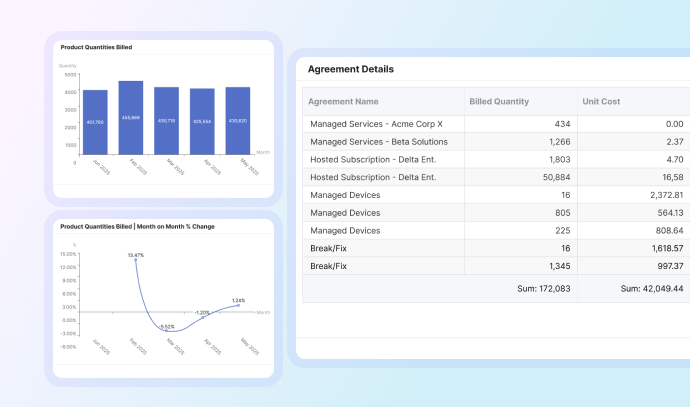
- Consider dashboards to visualize trends in real time for proactive management
With our profitability app dashboard, tracking trends is effortless, letting MSPs quickly identify issues and take action while contracts are still healthy.